Plot Twist: You've Been Using Your Cake Decorating Tools Wrong (Here's What Actually Works)
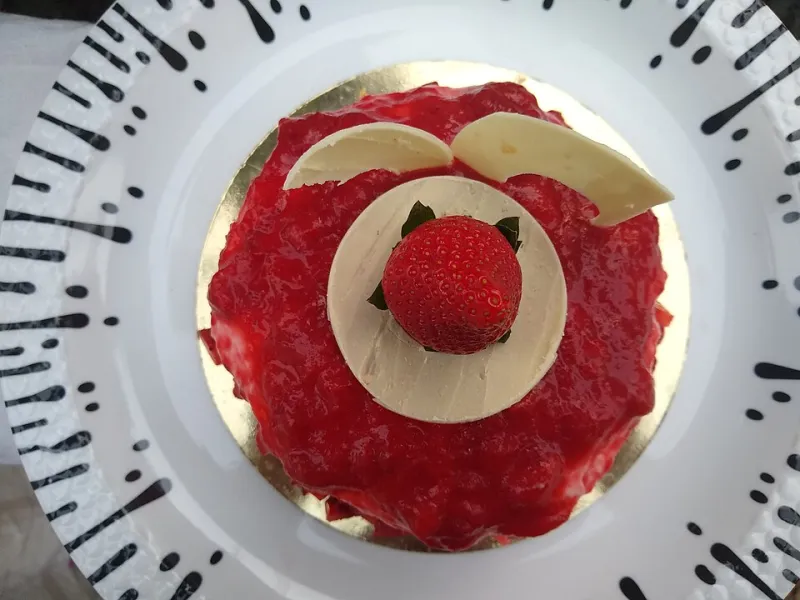
Photo: Shaili Sharma, CC BY-SA 4.0, via Wikimedia Commons
Let's establish something right up front: almost everyone starts out holding a piping bag like they're trying to strangle it into submission. This is normal. This is human. This is also why your rosettes look like abstract expressionism and your buttercream borders have the structural integrity of a fever dream.
The gap between "I own these tools" and "I know how to use these tools" is wider than most baking blogs will admit. So consider this your intervention—delivered with love, a little humor, and some genuinely useful information about why your offset spatula has been lying to you.
The Piping Bag Problem (It's Not What You Think)
Here's the mistake that takes down approximately ninety percent of home bakers: they squeeze from the middle. Or worse, they fill the bag so full that they're essentially arm-wrestling a sausage casing while trying to pipe delicate shells. The bag should be filled no more than halfway. Twist the top closed, tuck it between your thumb and forefinger, and let your dominant hand do the squeezing from the top. Your other hand? It's just a guide. It doesn't squeeze. It steers.
Pressure control is the whole game. Consistent pressure = consistent output. Variable death-grip pressure = a star tip that looks like it's having a meltdown. Practice on parchment paper before you go anywhere near an actual cake. Yes, it feels silly. Yes, it works.
The Weird Hack: Fill your piping bag, twist it closed, then stick it in a tall glass while you prep. The glass holds it upright, prevents air pockets, and stops the buttercream from migrating toward the tip before you're ready. It sounds absurdly simple. It is absurdly simple. It will change your life.
The Offset Spatula Angle Revelation
The offset spatula is arguably the most important tool in a cake decorator's arsenal, and it is almost universally misused by beginners. The most common error: holding it perpendicular to the cake and pushing frosting around like you're spreading peanut butter on toast. This creates drag, pulls up crumbs, and results in an uneven surface that no amount of additional frosting will fix.
The correct approach involves holding the spatula at a low, almost parallel angle to the cake's surface and using long, smooth strokes with light pressure. You're not spreading—you're gliding. Let the weight of the spatula do the work. Your elbow should be moving, not your wrist.
For the sides of a cake, a bench scraper held perfectly vertical while you rotate the turntable is going to do more for your smooth finish than any spatula technique. The spatula gets the frosting on. The bench scraper makes it smooth. They are partners, not competitors.
The Weird Hack: Warm your offset spatula in a cup of hot water, wipe it dry, and immediately smooth your buttercream. The heat melts the surface micro-texture of the frosting, giving you a finish that looks almost fondant-smooth without the fondant drama. Repeat as needed. Your clients will ask what your secret is. You will smile mysteriously.
Turntables: Are You Actually Turning?
This sounds like a joke, but we've seen it in the wild: people who own turntables and then... don't turn them while they're decorating. The entire point of a turntable is continuous rotation that lets you apply consistent pressure from a fixed position. If you're stopping and starting, chasing the cake around the table, you're essentially just using a very expensive lazy Susan.
Spin the turntable at a steady pace. Keep your tool still. Let the cake come to you. It's a meditative experience once you get the hang of it, and it produces dramatically more even results.
Budget vs. Splurge Reality Check: A cast-iron turntable from a professional supply company will run you $60-$90 and spins smoothly for decades. The $12 plastic version wobbles, tilts, and will gaslight you into thinking your cake layers are uneven when they're actually fine. This is one of the few tools where spending more genuinely matters. On the flip side? That $85 specialty cake comb you've been eyeing has almost identical results to a $4 hair pick from a beauty supply store. We tested it. The hair pick won.
The Dental Floss Trick (Yes, Really)
Want to level your cake layers without a cake leveler? Unflavored dental floss. Measure the height you want, press toothpicks around the perimeter of the cake at that height, hold the floss taut at toothpick level, and pull it straight through the cake in one smooth motion. The result is a cleaner, more even cut than most serrated knives produce, and it costs approximately nothing.
This is one of those hacks that professional bakers either roll their eyes at or quietly admit they've used in a pinch. Either way, it works.
Piping Tips: You Don't Need All of Them
The piping tip rabbit hole is real, expensive, and largely unnecessary. A 1M star tip, a round tip (size 12), a small round tip (size 3 or 4), and a petal tip will handle approximately 80 percent of everything you'll ever want to pipe. The rest is specialty territory that you can acquire as specific projects demand it.
What you do need: a coupler. This small plastic piece lets you swap tips without changing bags. If you're not using couplers, you're living a harder life than necessary.
The Weird Hack: A drinking straw, cut at an angle, makes a surprisingly effective tool for creating polka dot patterns or pulling buttercream into petal textures. It's also excellent for blowing out birthday candles in an emergency, but that's a different article.
The Expensive Tool That's Actually Worth It
A good cake turntable (see above). A quality bench scraper. And—genuinely—a digital kitchen scale. If you're still measuring flour by volume, your cake layers are almost certainly inconsistent in weight and texture, which means no amount of decorating skill will fully compensate for what's happening structurally underneath the frosting.
Everything else? Test the budget version first. You might be surprised.
The Takeaway
The best cake decorators aren't necessarily the ones with the most expensive toolkit—they're the ones who actually understand why each tool works the way it does. Technique beats equipment almost every time. A confident, well-angled offset spatula in a steady hand will outlast a drawer full of specialty gadgets used incorrectly.
So go warm up that spatula, half-fill that piping bag, and spin that turntable like you mean it. The cakes you've been dreaming of are closer than you think—and they've been waiting for you to stop strangling your piping bag.