Bake, Borrow, or Steal? The Surprisingly Thorny Legal World of Cake Design Inspiration
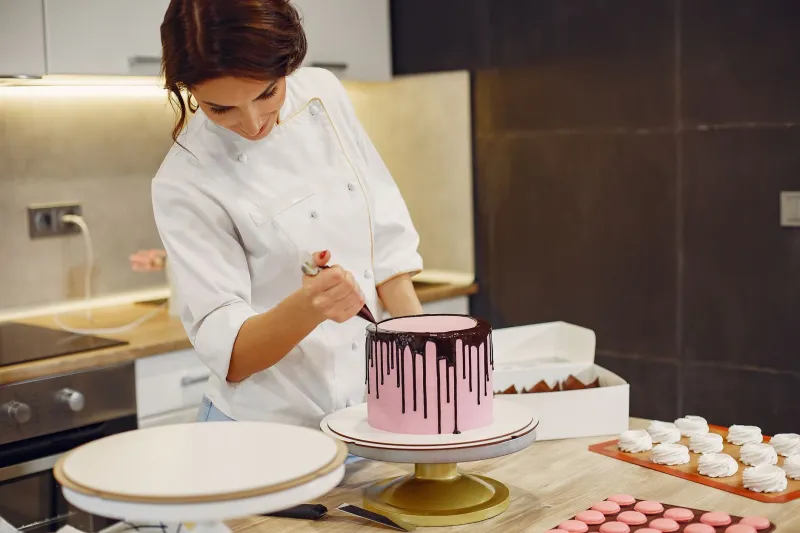
Let's set the scene. You're scrolling through Instagram at midnight (we've all been there, spatula in hand, dignity long gone), and you spot the cake. The one. Cascading sugar flowers, a hand-painted watercolor tier, and a fondant drape so ethereal it looks like it was sculpted by angels with culinary degrees. You screenshot it. You save it to your "inspo" folder. You think, I could totally do that.
Here's the thing nobody tells you at pastry school: sometimes "doing that" walks you straight into a legal gray zone so murky it makes Swiss meringue buttercream look crystal clear by comparison.
Welcome to the Cake Copycat Conundrum — where sugar meets art, and art occasionally meets a cease-and-desist letter.
Why Cake Design Is More Legally Complicated Than You Think
Most bakers assume that because their medium is edible and inherently temporary, the normal rules of intellectual property don't apply. Spoiler: they do. Partially. Sort of. It's complicated.
In the United States, copyright law protects original works of authorship that are fixed in a tangible medium. Here's the kicker — a cake absolutely qualifies as a tangible medium. A sufficiently original cake design, particularly one with a distinctive sculptural or artistic element, can carry copyright protection the moment it's created. No registration required.
That means the baker who first engineered that jaw-dropping gravity-defying floating tier design? They may have legal standing if someone copies it wholesale and passes it off as their own — especially if they're selling that copy commercially.
That said, copyright law does not protect general concepts, styles, or techniques. You can't copyright "a floral cake" or "a drip cake" or "a naked cake." These are ideas, and ideas are free for everyone. What's protected is a specific, original expression of those ideas.
The line between the two? Gloriously, infuriatingly blurry.
The Real-World Scenarios Where Things Get Sticky
The Viral Design Clone
A cake photo explodes on TikTok. Within 48 hours, bakers across the country are recreating it for paying customers. The original designer — who spent weeks developing that technique — watches their unique creation become a commodity overnight, often without credit and sometimes without even a tag.
Is it illegal? Maybe not always. Is it deeply uncool and potentially harmful to a small business owner's livelihood? Absolutely yes.
Several cake artists have spoken publicly about this exact experience, describing the particular sting of watching a signature design — one that took years to develop — become so diluted through copycat versions that it no longer reads as distinctly theirs.
The Celebrity or Branded Cake Request
A client slides into your DMs asking for a cake that's a dead ringer for a famous luxury brand's logo, or a hyper-detailed replica of a movie character. This is where copyright and trademark law team up like two very litigious superheroes.
Trademark law protects brand identifiers — logos, names, distinctive design elements. Copyright protects creative works — characters, illustrations, artistic designs. Recreating either on a cake for commercial sale, without a license, puts you in genuinely risky territory.
The fact that you're charging for the cake (rather than making it for free) makes it more of an issue, not less. And the defense of "but it's edible so it disappears" has never actually held up in court.
The Signature Style Swipe
This one's subtler and, honestly, more common. A baker develops a truly distinctive aesthetic — say, a particular way of texturing buttercream to look like rough linen, or a signature color palette and brushstroke style on hand-painted tiers. Another baker studies their work intensively and starts producing pieces that are, let's be honest, strikingly similar.
Even if no single element is technically protected, the overall "trade dress" — the total visual impression of a brand — can sometimes be legally protected. More practically, the cake community is small, social media is vast, and people notice.
So How Do You Borrow Inspiration Without Borrowing Trouble?
Here's the good news: inspiration is not theft. Every artist builds on what came before. The goal isn't to create in a vacuum — it's to absorb, transform, and create something genuinely yours. Here's how to do that with your integrity (and Instagram following) intact.
Use the Three-Source Rule
Design educators often recommend drawing from at least three distinct sources when developing a concept. If your inspiration lives in one single cake photo, you're basically just recreating it. Pull from a fashion editorial, a piece of architecture, a botanical illustration, and a cake you admire. What emerges will be something genuinely new.
Ask Yourself: What's the Idea vs. What's the Execution?
Floral cakes? Idea. Free for all. The specific arrangement, color palette, petal sculpting technique, and compositional choices of one particular baker's floral cake? That's their execution. Borrow the concept; develop your own execution.
Credit Liberally, Even When You Don't Have To
The cake community runs on goodwill and visibility. Tagging the designer who inspired you isn't just ethically solid — it's smart business. It demonstrates integrity, builds relationships, and often results in those designers shouting you out in return. Everybody eats.
When in Doubt, Reach Out
Seriously. If you're genuinely inspired by another baker's work and want to create something in a similar vein, just ask them. The worst they can say is no. Many designers are genuinely flattered — and some will even share tips — when approached respectfully. It's a wildly underused strategy.
Develop Your Signature, Relentlessly
The ultimate protection against being called a copycat is having a style so distinctly, recognizably yours that comparisons don't stick. That takes time, experimentation, and a willingness to make some truly questionable cakes in the process. Worth it.
A Note on Licensed Designs
If a client is dead-set on a character cake or a branded design, the above-board solution is to work only with officially licensed products — edible image printing services that hold proper licenses, for example — or to gently redirect clients toward an inspired-by design that captures the spirit without reproducing protected elements. It's a conversation worth having before you're elbow-deep in fondant.
The Bottom Line (Frosted, Naturally)
Cake design exists at this wild, wonderful intersection of food, craft, and fine art, and the legal framework is still catching up. Copyright law wasn't exactly written with sugar sculptures in mind. That ambiguity isn't a green light to copy freely — it's a reminder that ethical practice matters even when enforcement is imperfect.
The bakers who build lasting, respected careers aren't the ones who replicate the fastest. They're the ones who absorb everything, credit generously, and then make something the world hasn't quite seen before.
Steal like an artist? Sure. But in the cake world, the real flex is making something so undeniably yours that nobody else could have made it.
Now go forth, get inspired, and for the love of all things layered — tag your sources.