Frosting Freud: What Your Piping Style Secretly Reveals About You as a Baker
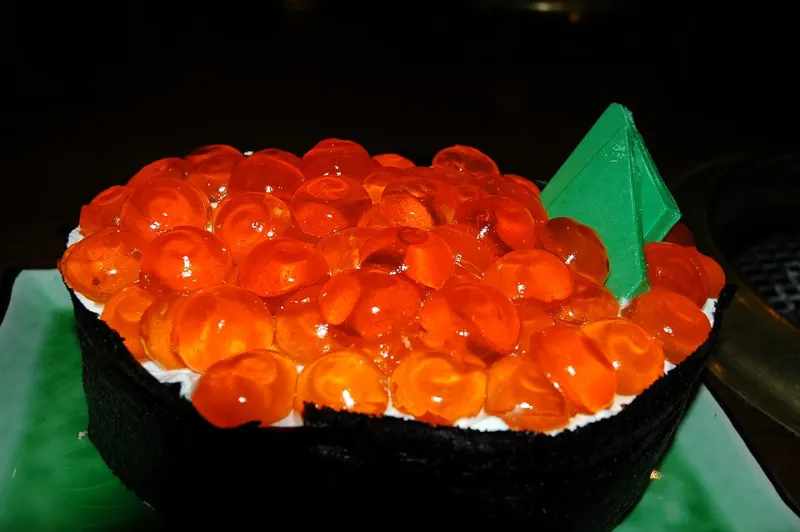
Photo: Marshall Astor from San Pedro, United States, CC BY-SA 2.0, via Wikimedia Commons
Therapists have the couch. Cakes Rock has the piping bag.
Here's a truth nobody in the baking world talks about enough: the way you decorate a cake is essentially a Rorschach test with buttercream. Your instincts — whether you're reaching for a ruler or just winging it with a offset spatula and a prayer — reveal your decorating personality, and that personality has enormous implications for which techniques will click for you, which tools deserve a spot in your drawer, and which cake designs will make you feel like an absolute rockstar versus a stressed-out disaster.
So let's do this. Read through the profiles below, pick the one that makes you laugh nervously because it's too accurate, and then stick around for the practical advice that follows each one. Self-discovery has never been this delicious.
The Precision Perfectionist
Signs you're this person: You own a cake turntable, a bench scraper, and a digital thermometer — and you know where all three are at any given moment. You've watched the same piping tutorial seventeen times. You measure your rosette spacing. You lose sleep over asymmetrical sprinkles.
Perfectionists are the backbone of the cake decorating world. Your cakes look like they were designed in a software program and then somehow materialized into sugar and flour. The clean lines, the flawless fondant, the piping so uniform it looks printed — that's all you, baby.
What this means for your technique: Lean hard into structured designs: sharp-edged buttercream finishes, geometric fondant work, and tiered constructions with precise doweling. You'll thrive with a French star tip for uniform shell borders and a straight-sided acrylic smoother for that mirror-flat finish. Isomalt work and sugar flowers are your Everest — challenging, technical, and deeply satisfying when nailed.
Your blind spot: Rigidity. When something goes sideways (and it will), perfectionists tend to spiral instead of pivot. Practice intentional imperfection — seriously, schedule it. Make a cake you're allowed to be messy on. It'll make you a more adaptable baker and, honestly, a calmer human being.
The Free-Spirited Abstract Artist
Signs you're this person: You describe your decorating style as "expressive." Your favorite technique is "I just kind of went for it." You've accidentally created something stunning and genuinely could not recreate it if your life depended on it. You own fourteen colors of food gel and use them all simultaneously.
Abstract Artists are the wild cards of the cake world, and the internet loves you for it. The brushstroke buttercream cakes, the paint-splatter ganache drips, the "abstract floral" designs that are somehow both chaotic and gorgeous — that's your energy.
What this means for your technique: Lean into textural techniques: palette knife painting, watercolor buttercream effects, and hand-painted edible art. The Korean-style buttercream flower trend was practically invented for you. Embrace the scrape-and-swipe method for organic frosting textures. You don't need a stencil — you are the stencil.
Your blind spot: Structure. When a client asks for "something whimsical but also kind of elegant," the Abstract Artist can veer into "looks like a kindergarten art project" territory without a loose plan in place. Before you start, spend five minutes sketching a rough concept. Just a rough one. You don't have to follow it exactly — but having a north star keeps things from going full chaos.
The Minimalist Modernist
Signs you're this person: Your ideal cake is a single-tier, matte white buttercream with one dried flower and negative space used as a design element. You've used the phrase "less is more" unironically. Your Instagram aesthetic is very much a neutral linen tablecloth and soft morning light.
Minimalists are having a serious cultural moment right now, and for good reason. The restraint required to make a simple cake look intentional rather than unfinished is genuinely difficult and deeply underrated.
What this means for your technique: Smooth buttercream application is your core skill — invest time in mastering the bench scraper technique because there's nowhere to hide on a minimalist cake. Wafer paper textures, subtle combed finishes, and single-element toppers (dried citrus, edible gold leaf, a single statement bloom) are your toolkit. The Lambeth piping style — that ornate Victorian-era raised piping — also works surprisingly well for Minimalists who want one dramatic design element against a clean backdrop.
Your blind spot: Playing it too safe. Minimalism done wrong just looks like you ran out of ideas or frosting. Push yourself to make one deliberate, confident design choice per cake — something that makes a viewer stop and look twice.
The Enthusiastic Chaos Agent
Signs you're this person: Every cake you make somehow ends up with more going on than you originally planned. You added the sprinkles, then the drip, then the macarons, then the fondant bow, and now there's also a sparkler. You've described a cake as "fun and maximalist" when you meant "I couldn't stop."
Chaos Agents are the life of the party — literally. Your cakes are the ones that make people gasp at the dessert table, and not always for the reasons you intended, but the energy is infectious. You make baking feel fun, which is genuinely important.
What this means for your technique: Channel that maximalist instinct into structured abundance: drip cakes with intentional placement, number cakes loaded with cohesive toppings, and gravity-defying designs that earn their drama. Learn the rule of odd numbers for topper placement (groups of three and five look intentional; groups of four look cluttered). A unified color palette will transform your cakes from "a lot" to "wow."
Your blind spot: Cohesion. Pick a theme and commit to it before you start decorating. Write it down. "Retro 70s disco" is a theme. "Things I like" is not.
Why Any of This Actually Matters
Here's the practical punchline: knowing your decorating personality isn't just a fun party trick. It's actually a shortcut to better results.
When you try to force yourself into a style that doesn't match your instincts, you fight yourself the entire way through. The Perfectionist attempting loose, gestural brushwork without any scaffolding gets frustrated and quits. The Abstract Artist trying to execute a mathematically precise fondant tile pattern loses their mind by hour two. Alignment between your natural tendencies and your chosen techniques means less friction, faster skill-building, and cakes you're genuinely proud of.
That said — and this is important — your personality isn't a cage. It's a starting point. The best bakers borrow from every profile. The Perfectionist learns to loosen up. The Chaos Agent learns to edit. The Minimalist learns to take a risk. Growth lives right at the edge of your comfort zone, which in this case happens to be frosted and covered in edible glitter.
So figure out where you are, lean into your strengths, and then — when you're ready — grab a tip you've never used before and see what happens. Worst case, you've got a funny story. Best case, you've just discovered your next signature style.
Either way, the cake still gets eaten. And that, friends, always rocks.