Oops, I Did It Again (And Now It's on the Menu): The Glorious Science of Turning Cake Disasters Into Signature Masterpieces
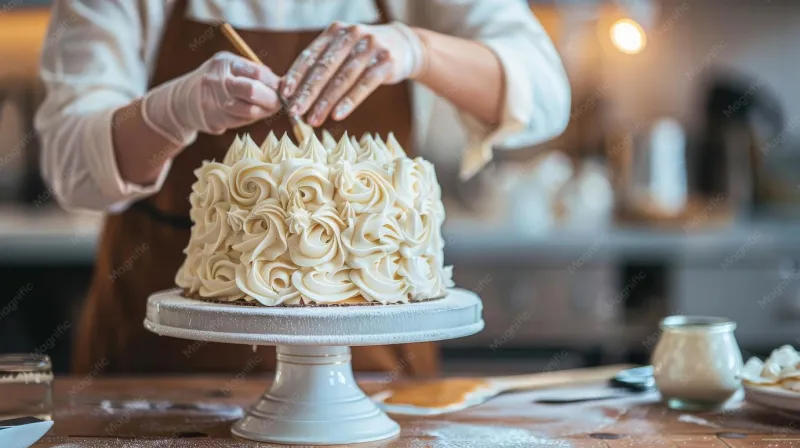
Photo: baker decorating imperfect rustic cake with dripping ganache and colorful frosting in bakery kitchen, via img.freepik.com
Every professional baker has a skeleton in their oven — a catastrophic cake moment so mortifying it lives rent-free in their head forever. The collapsed wedding tier. The ganache that separated into something resembling motor oil. The fondant color that mixed into a shade best described as "bruised eggplant at sunset." Mortifying? Absolutely. Career-ending? Not even close.
Because here's the thing nobody tells you in culinary school: some of the most iconic, beloved, and flat-out gorgeous cake designs in the business were born from pure, unfiltered disaster. Turns out, failing spectacularly is basically just R&D with better snacks.
The Collapse That Started a Movement
Let's talk about the rustic cake trend — that effortlessly undone, charmingly imperfect aesthetic that basically took over every Pinterest board and bridal magazine between 2015 and, well, right now. You know the look: exposed sponge, swooping uneven frosting, a vibe that whispers I made this in a charming Vermont farmhouse kitchen even when it was made at 2 a.m. in a tiny Brooklyn apartment.
Here's what the aesthetic blogs won't tell you: a significant chunk of that movement traces back to bakers who were simply trying to cover up structural failures. A layer that slid. A sponge that domed aggressively and refused to be tamed. A filling that oozed in ways that were technically impressive but aesthetically chaotic.
Rather than starting over — because who has time, flour, or emotional bandwidth for that — savvy bakers leaned in. They scraped the frosting back, let the layers show, called it intentional, and charged accordingly. The customer loved it. The internet loved it more. And just like that, a mistake became a movement.
The science behind why it works is actually fascinating. Exposed sponge layers create visual texture that communicates handcrafted authenticity. In a world drowning in hyper-perfect mirror glazes and flawlessly smooth fondant, a little beautiful imperfection reads as artisanal rather than accidental. Your brain literally processes it as more human, more real, more trustworthy. Disaster, meet neuroscience.
The Drip That Dripped First
If you've spent more than eleven minutes on cake Instagram, you've seen the drip cake. Ganache or glaze cascading dramatically down the sides of a frosted cake like a delicious waterfall of chocolate chaos. It's everywhere. It's on birthday cakes, wedding cakes, gender reveals, and that one extremely extra cake at your coworker's retirement party.
The origin story of the drip cake is essentially: someone's ganache was too warm, it ran, and instead of panicking, they kept going.
The technique behind a controlled drip is genuinely a science experiment. Temperature is everything — ganache that's too hot runs all the way to the board and pools into a sad puddle. Too cool and it barely moves, sitting on the edge like it's afraid of heights. The sweet spot (around 90–95°F for a classic dark chocolate ganache) creates that perfect, dramatic, Instagram-destroying cascade that stops just before the base.
Bakers who figured this out didn't do it from a textbook. They did it by watching their ganache misbehave, adjusting obsessively, and eventually reverse-engineering the mistake into a repeatable, teachable technique. The disaster was the prototype. The controlled version was the product.
Color Chaos and the Tie-Dye Buttercream Era
Remember when tie-dye everything made its cultural comeback around 2020? (As if we needed more chaos that year.) The cake world went absolutely feral for it — swirling, psychedelic buttercream cakes that looked like a Grateful Dead concert and a birthday party had a beautiful, sugary baby.
Here's a secret: a lot of those early viral tie-dye cakes were accidents. Bakers mixing multiple batches of colored frosting, running short on one shade, blending leftovers together, and suddenly discovering that when you pipe multiple colors into a bag simultaneously and swirl them onto a cake, the result is genuinely jaw-dropping.
The happy accident here was a physics one. Different colored buttercreams, when loaded into a single piping bag and applied with varied pressure and rotation, blend at the surface in unpredictable but visually stunning ways. The lack of control is the technique. You cannot perfectly plan a tie-dye cake — and that's precisely what makes it work. The randomness is the art.
Bakers who leaned into this discovered something important: sometimes the best design instruction is less instruction. Let the frosting do what it wants. Guide it loosely. Trust the chaos.
The Confidence Variable (It's More Important Than Your KitchenAid)
Here's the ingredient that doesn't come in a bag from your local restaurant supply store: confidence. Specifically, the confidence to look at something that went sideways and say, out loud, to a paying customer, "Yes, this is exactly what I intended."
This is not about lying. It's about creative reframing — a skill that separates good bakers from legendary ones. When something unexpected happens in the decorating process, the question isn't always how do I fix this? Sometimes the better question is how do I make this the point?
A cracked fondant surface becomes a deliberately distressed, vintage-inspired finish. An overfilled layer that bulges slightly becomes a "generous" design feature that gets specifically requested by future clients. A frosting color that mixed darker than expected becomes the moody, dramatic palette that defines your whole aesthetic for the next three years.
None of this happens without the willingness to stand behind the result. And that willingness? That's a skill you develop by failing repeatedly and surviving every single time.
Your Disaster Is Your Data
The bakers who turn catastrophes into signatures aren't just lucky. They're paying attention. Every time something goes wrong, they're cataloging what happened — the temperature in the kitchen, the humidity, the brand of butter, the way the layers were stacked. They're building a mental (or very literal, very annotated) database of how their ingredients and techniques behave under stress.
This is, genuinely, how baking science advances. Not in controlled lab conditions, but in real kitchens, under real pressure, with real deadlines and real clients texting "just checking in 😊" at 11 p.m.
So the next time your cake does something completely unhinged — the next time the layers slide, the frosting weeps, the color goes rogue — take a breath. Take a photo. And ask yourself: is this a failure, or is this your next signature move?
Because at Cakes Rock, we firmly believe that the most interesting designs don't come from playing it safe. They come from the moments when everything goes sideways and you're creative (and caffeinated) enough to make it rock anyway.