Show Me the Money (Cake): The Brutal Truth About What Custom Orders Actually Cost

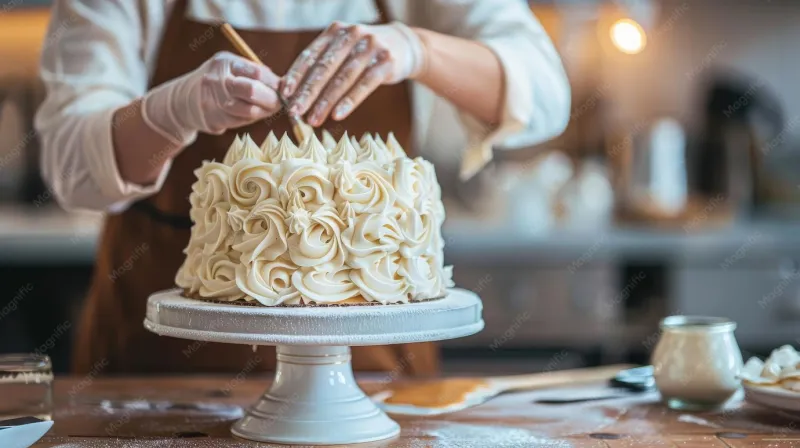
Photo: Jasper van der Meij jaspervandermeij, CC0, via Wikimedia Commons
Let's set the scene. You've found the cake of your dreams on some baker's Instagram — three tiers, hand-painted florals, a cascade of sugar pearls that look like they were individually blessed by a pastry chef in Paris. You slide into the DMs, heart full of hope and wallet full of optimism, and ask for a quote.
The number comes back and your optimism evaporates faster than buttercream in a Phoenix August.
"But it's just cake," you think.
Friend, it is never just cake. And if you're a home baker who's been selling your masterpieces at "just cover my ingredients" prices, this article is your intervention. Pull up a chair. We need to talk about money.
The Ingredient Iceberg (What You See vs. What You're Actually Buying)
Let's start with the obvious: ingredients cost money. But here's where most people — customers and rookie bakers alike — completely miss the boat. The ingredient list for a custom cake isn't just flour, butter, and a prayer. It's:
- High-quality extracts and flavorings (real vanilla bean paste costs a small fortune compared to the imitation stuff, and yes, your taste buds know the difference)
- Specialty food colorings (professional gel colors that actually behave on fondant aren't the $2 bottles from the craft store)
- Edible gold leaf, luster dust, and metallic paints (these little jars of shimmer are basically liquid rent money)
- Fresh flowers or custom toppers (either sourced, made by hand, or both)
- Dowels, cake boards, and structural supports (because nobody wants a $300 cake that arrives as a delicious rubble pile)
A single tiered cake can easily rack up $60–$100 in raw ingredients alone before the baker has touched a single mixing bowl. And that's before we get to the fun part.
The Time Tax Nobody Talks About
Here's the thing about custom cake pricing that makes customers gasp and under-charging bakers weep: time is the biggest line item on the invoice, and it's almost entirely invisible.
Consider the full timeline of a custom order:
Consultation: That 45-minute back-and-forth via DM, email, or phone call where you nail down flavors, design, size, and dietary restrictions? That's real work time. Multiply it by the number of clients in a week and you've got a part-time job that pays exactly nothing if it's not baked into the price.
Design and planning: Sketching concepts, sourcing inspiration, figuring out structural logistics. A gravity-defying cake doesn't just happen — it gets engineered.
Bake time: Multiple layers, often baked in batches across different days to allow proper cooling. A three-tier cake might represent six to eight individual baking sessions.
Decorating: This is where the hours truly vanish. Hand-piped details, sugar flowers, painted elements — professional decorators routinely spend 10 to 20+ hours on a single complex cake. At even a modest $15/hour labor rate, you're already looking at $150–$300 in time before a single overhead cost enters the chat.
Revisions and communication: The customer who changes the color palette three times, needs the inscription font adjusted twice, and checks in daily to "just confirm" the order is happening? All of that is billable time in any other industry. In custom baking, it's often absorbed silently and resentfully.
Overhead: The Villain in the Background
Every professional baker — and every home baker who's serious about their side hustle — is running a small business whether they've filed the paperwork or not. That means overhead is real and it is relentless.
We're talking about:
- Equipment depreciation (stand mixers, turntables, airbrush kits, and specialty pans aren't cheap, and they don't last forever)
- Packaging (custom boxes, ribbon, tissue paper, and those little "handle with care" stickers add up faster than you'd think)
- Kitchen costs (electricity, gas, water — your oven running for six hours isn't free, and neither is the industrial dishwasher cycle that follows)
- Licensing and insurance (if you're selling food in the US, you likely need a cottage food license at minimum, and liability insurance if you're operating at scale)
- Software and marketing (that gorgeous Instagram feed doesn't curate itself, and scheduling tools, editing apps, and website hosting all cost money)
A reasonable overhead allocation on a custom cake order can easily add another 20–30% to the total cost before profit even enters the equation.
So What Should a Custom Cake Actually Cost?
The honest answer is: more than most people expect, and often more than many bakers charge.
A simple rule of thumb used by professional bakers is to multiply ingredient cost by three to cover labor and overhead — and then add a design premium for anything that requires specialized skills. A cake with sugar flowers, hand-painted details, or complex structural elements commands a premium because those skills took years to develop. You're not just paying for cake. You're paying for the decade of practice that made the cake possible.
For reference, here's a very rough US market breakdown for custom cakes in 2024:
- Simple 2-tier buttercream cake: $150–$250
- 3-tier semi-naked with fresh flowers: $250–$450
- Fondant-covered tiered cake with custom details: $400–$800+
- Full showstopper / sculpted / gravity-defying cake: $800–$2,000+
If you're seeing quotes below these ranges, someone is either losing money, cutting corners, or both. None of those outcomes end well for the cake — or the baker.
A Note to the Home Bakers Ready to Go Pro
If you've been gifting cakes to friends and family and everyone keeps telling you to "start a business," first: that's amazing, you clearly rock (we'd expect nothing less from this community). But before you post your first order form, sit down and do the actual math.
Calculate your real ingredient costs. Track your actual hours. Research your local cottage food laws. And for the love of fondant, charge what you're worth.
Underpricing doesn't just hurt your bank account — it devalues the entire craft and makes it harder for every baker in your market to charge fairly. The custom cake world is better when it's populated by sustainable, profitable bakers who can keep doing what they love without burning out.
The Bottom Line (Which Is Also the Most Delicious Line)
Custom cakes are art. They're engineering. They're edible labor-of-love wrapped in buttercream and tied up with a fondant bow. The next time you see a price tag that makes you flinch, try thinking of it less as "the cost of cake" and more as "the cost of someone's expertise, time, creativity, and really excellent vanilla bean paste."
Because when you break it all down, that $200 naked cake? It's practically a steal.
And to every baker out there quietly absorbing costs and undercharging because you're afraid of the conversation: your work rocks. Price it like it does.